

ICT Ministry Service Charter Boosts Digital Performance
 Editor Corporate NewsUpdated 1 month Ago1 Mins read153
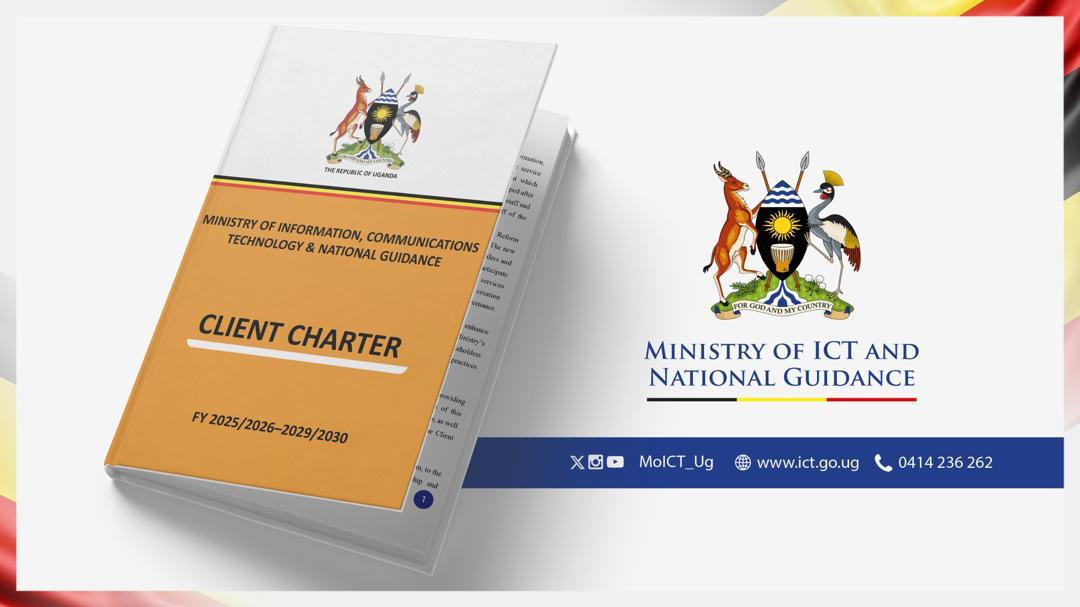
Strategic Move for Service Excellence
Kampala, Uganda – 2nd February 2026
The Ministry of ICT and National Guidance has introduced a new Client Service Charter for FY 2025/26 to FY 2029/30. The Charter acts as a strategic tool to improve service efficiency, accountability, and value delivery within Uganda’s government-led digital transformation.
It outlines clear service standards, delivery timelines, and accountability frameworks. By doing so, the Ministry reinforces its role as a key enabler of Uganda’s digital economy and public sector modernization. Additionally, the Charter aligns with broader public service reforms aimed at improving operational efficiency and customer experience in government institutions.
Commitment to Results-Driven Management
Launching the Charter, Permanent Secretary Dr Aminah Zawedde highlighted a shift toward results-driven management and performance measurement.
“This Charter reflects our commitment to measurable outcomes. Beyond building ICT infrastructure, our focus is now on service quality, timeliness, and impact. We will assess performance based on how effectively services meet the needs of citizens and institutions,” Dr Zawedde said.
She also explained that the Charter embeds monitoring and evaluation systems. These systems track service delivery, strengthen feedback channels, and support data-driven decision-making, all critical for improving operational effectiveness.
Client Service Charters as Management Tools
Deputy Head of the Public Service, Jane Kyarisiima Mwesiga, presided over the launch and emphasized that Client Service Charters should function as management tools rather than ceremonial documents.
“For government to deliver value, commitments must translate into visible improvements. This Charter promotes transparency, professionalism, and trust, while supporting efficient use of public resources,” she said.
Ms Kyarisiima added that the Charter complements ongoing public sector reforms. These reforms focus on improving productivity, ethical standards, and value for money. She also reaffirmed the Office of the Head of Public Service’s support in strengthening institutional capacity, promoting innovation, and providing oversight to ensure targets are met.
Scope and Access of the Charter
The Charter details the Ministry’s commitments in ICT infrastructure development, digital platforms, cybersecurity, data protection, innovation support, communication, and national guidance. It clearly defines service access standards, client responsibilities, and structured mechanisms for handling feedback and complaints.
In line with the government’s digital-first strategy, citizens can access the Charter primarily through the Ministry’s website and official social media channels. This approach improves cost efficiency, supports environmental sustainability, and expands public access to information.







Uganda Takes Stake as Kenya Pipeline Company Lists on Nairobi Securities Exchange
Uganda has strengthened its position in the regional energy sector after acquiring...
Editor Corporate News2 Mins read

Mbabazi K. Emejeit; From Legal Foundations to Banking Boardroom, Defining Integrity & Leadership
In Uganda’s evolving banking landscape, strong governance and compliance matter more than...
Editor Corporate News2 Mins read
Centenary Bank Donates 20 Waste Bins to Gayaza High School to Promote Environmental Cleanliness
Centenary Bank has donated 20 waste bins to Gayaza High School as...
Editor Corporate News1 Mins read

NSSF Warns Retirees Against Squandering Savings
NSSF retirement savings management is critical for workers preparing for life after...
Editor Corporate News2 Mins read