

The Small Habit That Separates the Rich From the Broke
 Corporate editorUpdated 3 months Ago4 Mins read259

The Excitement of Deciding to Change Your Finances
There is a story many people share, but rarely admit publicly. It usually begins with excitement and determination — the moment you finally decide that this time you will get serious about money. Maybe you attended a financial literacy talk, maybe you read a book or listened to a podcast, or maybe someone shared a story about how budgeting changed their life.
Suddenly you download a budgeting app on your phone. This is it; you tell yourself. The turning point. You start tracking everything. Taxi fare. Lunch. Airtime. Even the soda you bought in the afternoon. For the first time in your life, you can actually see where your money is going. It feels powerful. Almost revolutionary.
When the Budgeting Habit Starts to Break
Day one goes very well. Day two goes well too. Then on day three you forget to record a small expense — maybe a quick boda ride or a small bite from the supermarket. You tell yourself you will update it tomorrow. The following day you are trying to remember what you spent yesterday. By the end of the week the app is no longer recording reality; it is recording guesses.
So, you change tactics. This time you buy a small notebook. You will write every expense down immediately and transfer it into the app later. Week one works. Week two becomes shaky. By the end of the month the notebook is somewhere in a drawer and the app hasn’t been opened in days.
And then a dangerous question quietly enters your mind: why am I stressing myself like this? After all, I am the one who earns the money. Who exactly am I accountable to? Why should I torture myself tracking every small coin?
And just like that, you stop. What many people don’t realize is that the day they abandon their budget is often the day they quietly abandon their future financial freedom.
Discipline Matters More Than Income
Some people do not like the word budget because it sounds restrictive, almost like punishment. So, they prefer softer terms like an “income–expense strategy.” But whether you call it a budget or a strategy, the principle remains the same: deciding where your money should go instead of wondering where it went.
From my experience — both personally and from running a money lending business — earning more money is not necessarily the cure for financial chaos. I have seen someone earning three million shillings per month who saves and invests far more consistently than someone earning ten million.
The difference is rarely income. The difference is discipline. Money obeys discipline more than it obeys income. According to the Financial Sector Deepening Uganda survey, fewer than a third of Ugandans formally track their spending or save consistently. Yet those who do are significantly more likely to withstand financial shocks.
Wealth Is Built Through Consistency
Budgeting works very much like going to the gym. Nobody grows muscles by exercising for two days from morning to evening. That would only leave you with pain and exhaustion. Real results come from consistency — thirty minutes a day, week after week, month after month. Small effort repeated faithfully.
Money behaves the same way. You don’t build financial stability through dramatic gestures. You build it through small, disciplined decisions repeated over time.
I head one investment club where members save only one hundred thousand shillings per month. Someone once asked why we don’t allow members to simply pay the whole year’s contribution at once. But that would miss the entire point.
The goal is not the lump sum. The goal is the habit. Wealth is rarely built through one big payment; it is built through consistent discipline.
How Budgeting Reveals Hidden Expenses
One of the interesting things about budgeting is that it reveals expenses you never knew existed. At a personal level, we once discovered that one of our cars was consuming over four hundred thousand shillings worth of fuel every week. That translates to about 1.6 million shillings per month just going into the tank.
Now if someone comfortably earns enough to handle that, there is no issue. But if raising that amount weekly requires effort, then that car quietly becomes a financial leak.
After reviewing the numbers carefully, we made a simple adjustment and switched to a more efficient vehicle. Fuel consumption dropped to about four hundred thousand shillings per month instead of per week. That difference alone freed up more than a million shillings monthly for better use.
But without tracking expenses, we would never have noticed.
Small Household Purchases Add Up
Another discovery came from something even more ordinary — household shopping. Many homes make small daily purchases: sugar today, bread tomorrow, cooking oil next week. Each purchase seems harmless.
But budgeting exposes the hidden costs. There are mobile money withdrawal charges, transport costs, impulse purchases when you walk through supermarket aisles, and the time spent making frequent trips.
When we began buying certain household items in bulk and stocking them in advance, our expenses on those items dropped by more than twenty percent. That is the power of visibility.
Budgeting Creates Freedom
A budget is often misunderstood. People think budgeting means denying yourself enjoyment or becoming stingy. But that is not what it is about.
A budget is not about being mean. It is not about being a miser. It is simply about directing where your money should go rather than wondering where it has gone.
When done properly, a budget actually gives you more freedom. It allows you to spend without anxiety because you know the money was planned for. It allows you to enjoy your income without the quiet fear that something important has been neglected.
Why Consistency Is the Hardest Part
Of course, the hardest part is not starting. The hardest part is continuing when it becomes uncomfortable. The moment budgeting starts to feel painful is often the moment it begins to work.
It is similar to exercising muscles — the day after the workout when the muscles ache is when growth is happening. Your decision the following day determines the outcome.
Do you stop because it is uncomfortable, or do you continue because you know the results will eventually come?
Financial discipline works the same way.
A Budget Protects Your Future
If it becomes difficult, find an accountability partner — someone who can check in with you and help you stay consistent. Not because you are weak, but because discipline grows stronger when supported.
At the end of the day, a budget does not exist to control you. It exists to protect you. It protects your peace of mind, your future, and your financial freedom.
Because money will always flow somewhere. The real question is simple: will you decide where it goes, or will you spend the rest of your life wondering where it went?






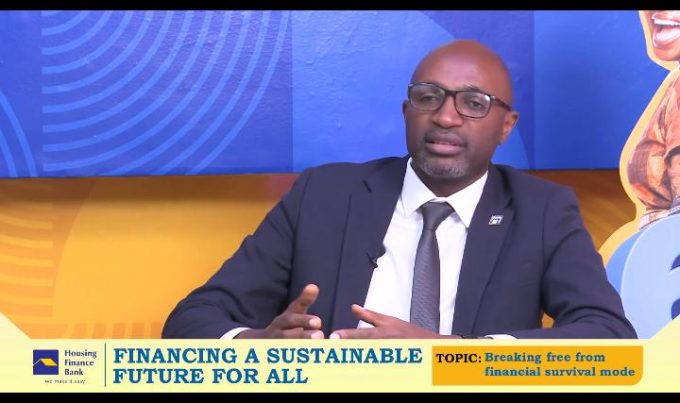
Breaking Free from Survival Mode: Lessons on Financial Discipline from Dickson Mushabe
At a recent Housing Finance Bank conversation under the theme “Financing a...
Corporate editor2 Mins read

Dr. James Magara’s ‘Praying for Uganda’ a review by Susanna Namuli
I am pleased with the timing of the release of this book:...
 Editor Corporate News6 Mins read

You Built a Mansion but Traffic Raised Your Children
The Kampala commuter crisis lifestyle is quietly reshaping families, finances, marriages, and...
Editor Corporate News4 Mins read

When Money Is Plenty, Everything Makes Sense. Until It Doesn’t.
Jonan Kandwanaho, There’s a funny thing about money when it’s around. Suddenly,...
 Corporate News Editor4 Mins read