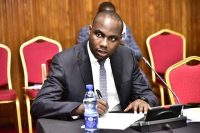

Dr. James Magara’s ‘Praying for Uganda’ a review by Susanna Namuli
 Editor Corporate NewsUpdated 3 months Ago6 Mins read353
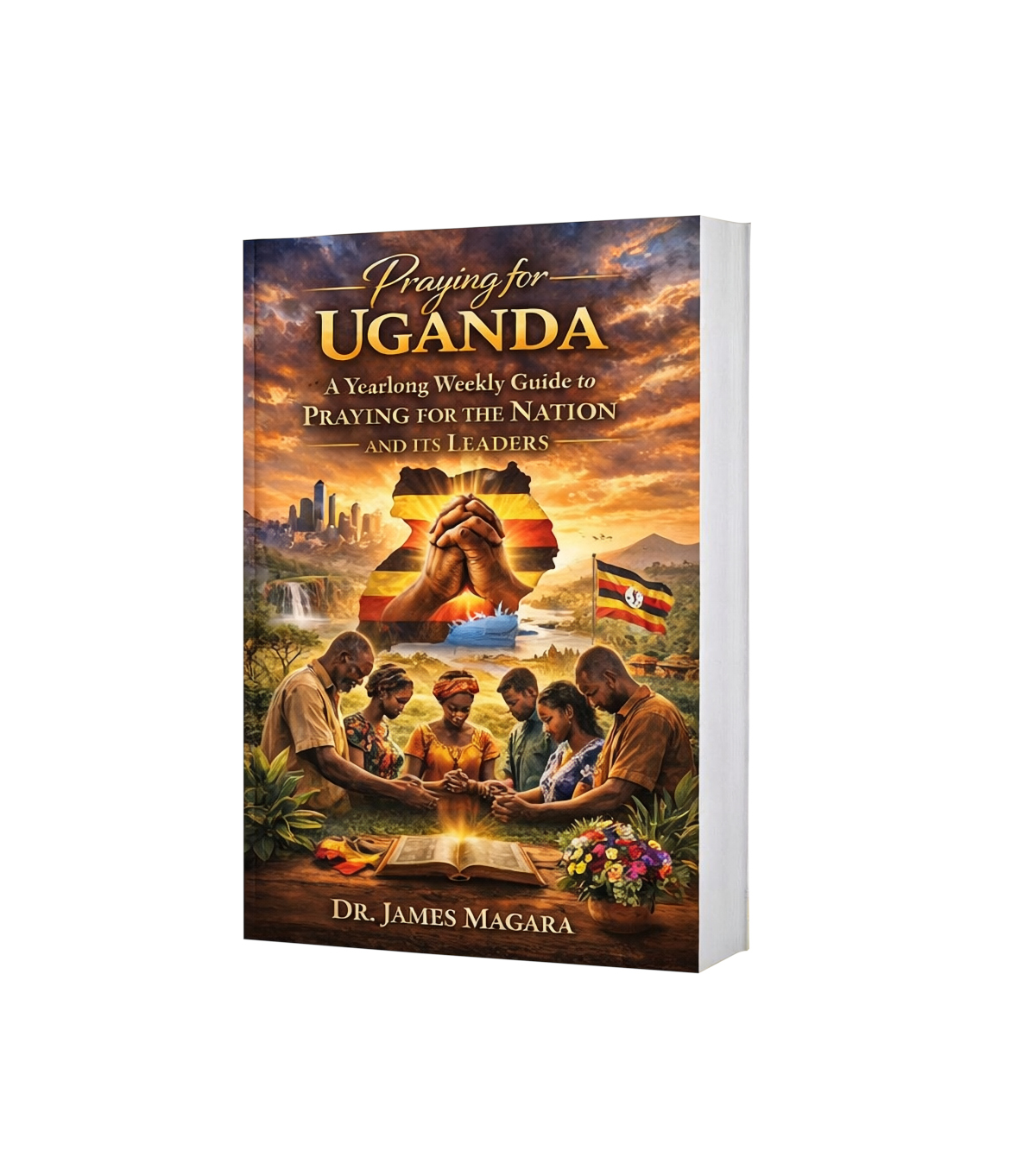
I am pleased with the timing of the release of this book: Sunday March 8th, International Women’s Day 2026.
The first time I encountered a version of the idea of ‘male partners’ or ‘male champions’ as it pertains to how society treats its women was in a talk by Dr. James Magara. (It may have been how the church treats women but this was a long time ago, I can’t remember the details)
Dr. Magara had been asked to speak on the topic and in his opening remarks had joked saying (paraphrased): “It is good that I, a man, have been asked to speak on this. Otherwise, half of the congregation was going to tune out.”
One of the themes that run throughout this book is well summarised in this statement: “God Himself judges leaders by how they treat the powerless. – Speak up for those who cannot speak for themselves, for the rights of all who are destitute.”
Dr. Magara then goes on to detail how in several instances, many women in Uganda find themselves in the unfortunate classification of ‘vulnerable’.
“Women and youth form the majority of Uganda’s agricultural labour force, yet often lack access to land ownership, credit, and markets. Just governance ensures inclusion, fair pricing, and empowerment of the marginalised.”
“Access to clean water and sanitation is a human necessity. Yet in weak governance systems, slum dwellers, rural communities, women, and children are the first to suffer from contaminated water and preventable diseases.”
“Tens of thousands of Ugandans – mostly young women working as domestic workers and young men in construction, security, or driving – seek better-paying jobs abroad due to limited opportunities at home.”
“Today, many Ugandans – particularly women, rural farmers, and youth – remain excluded lacking access to formal credit, insurance, and investment opportunities.
“Ask God to cleanse Uganda’s culture of practices that devalue women, children, and the vulnerable.”
Dr. Magara clearly has a commitment to women especially when we are marginalised in society.
He, however, also recognises women’s role in societal, and righteous leadership.
“Uganda has one of the highest rates of entrepreneurship in Africa, especially among youth and women.”
“The Messianic reign raises noble leaders – men and women who plan what is right and stand firm in righteousness. Integrity becomes strength.”
As I review this book, first some confessions:
- Details of some of the events mentioned in the book had only been present in my mind as a vague recollection. Things like the 2018 National Dialogue. The fuzzy knowledge stretched to historical facts, national statistics, and policy positions. I have therefore appreciated this prayer guide as a sort of ‘Get to know Uganda’ book. Some more on this later.
- Although I have been closely aware of the events surrounding Uganda and Africa’s prayer movement (my father Laban Jjumba founded Intercessors for Uganda – IFU) I have never been a keen participant in the activities of the national prayer movement. I did, however, spend some weeks in leadership training on IFU’s SALT (Sundoulous African Leadership Training) program.
- I carried out a proofread of one of the final drafts of the manuscript and confess to an overall enjoyment of the read.
As mentioned at the start, whether or not you are a pray-er, this book may serve one well as a ‘Get to know Uganda’ guide.
I read with great interest as Dr. Magara wrote about: Uganda’s National Ethical Values Policy (NEVP) – did you know this was a thing? I didn’t; the origins of the Kiira Motors Cooperation; the National Guidelines for Research involving Human Participants, and others. My favourite bit was his chronicling of Uganda’s tribes from smallest to largest. He weaves these throughout the book, at the end of every chapter, almost like a special story treat, a reward for your persistence in handling the heavier intellectual material.
So, if for no other reason, this is a good motive to read Dr. Magara’s prayer guide – so that you can show off some knowledge of Uganda.
Another theme, which is probably the entire point of this book, comes through in the statement: “Yet we must remember: Vision 2040, while vital, is temporal. Uganda’s higher calling is to align with God’s eternal kingdom. “The kingdoms of this world have become the kingdoms of our Lord and of His Christ” (Revelation 11:15). National development must therefore be measured not only in GDP, but in righteousness, justice, and peace. Uganda’s ultimate destiny is to glorify God among the nations.
In this, every praying Ugandan is assigned a civic responsibility: To continually present this petition to God: “Let Uganda be a nation where justice flows like a river, and righteousness like a never-failing stream (Amos 5:24).
On prayer for the nation, Dr. Magara addresses a criticism that is regularly aimed at intercessors: “In recent times, prayer – especially on the African continent – has come under mounting criticism. In public discourse and across digital platforms, prayer is often ridiculed, with the claim that although Africa prays fervently, the continent remains burdened by poverty and underdevelopment. Such arguments miss a deeper truth…” and here, I shall leave it to the reader to purchase the book and thus, engage with the deeper truth that Dr. Magara presents.
As a ‘Get to know Uganda’ guide, the book is particularly excellent when dealing with the subjects at which Dr. Magara is a recognised expert. With over 30 years’ experience in clinical dentistry, a board chairmanship at the Uganda Heart Institute and a businessman running a chain of dental clinics, Dr. Magara is well placed to research and write about the health sector.
He is also heavily involved in education, as lecturer, investor, policy advisor, and for lack of a better term, enthusiast.
With a doctorate in strategic leadership and with his longterm service in diverse leadership roles in the church, in business, and in the nation, there is hardly a subject that Dr. Magara could possibly be deficient at. And yet, I did find one.
Reading one of the final drafts of the book, I was almost amused at how Dr. Magara wrote on ‘Entertainment, Celebration and Governance’. Amused because I happen to know that he is, as multipotentialites go, also gifted as a playwright and I would expect, quite knowledgeable/curious/authoritative about Uganda’s arts scene.
I found that his chapter on this lacked the authority that he had displayed writing on the other subjects.
My suspicion is that Dr. Magara faced what many Christians have to grapple with when it comes to the Arts. – How should Christians deal with theatrical, musical, and other creative talent that is not church worship?
Put directly; what does Dr. Magara make of the fact that Joshua Waiswa, a former Head of Content Production at Swangz Avenue (which manages such musicians as Winnie Nwagi, Vinka, Elijah Kitaka, and Azawi) is a committed, Bible believing, tongues speaking Christian?
Or perhaps as the unifier that Dr. Magara tries to be, he chose to address the topic only in the context of nation building – as he only dealt with the cultural aspect of celebration; tribal music and dance.
As a very important part of the lives of millions of Ugandans, particularly the over 75% youths, I believe that the Arts should have been addressed more authoritatively. Perhaps Dr. Magara could have had guest writers on the chapter, presenting different views and together, they could have come up with a prayer direction on the subject.
My other criticism regarded another subject at which Dr. Magara is an authority. As mentioned at the beginning, I happen to have some knowledge of national events that have been shaped by the prayer movement.
Read as a ‘Get to know Uganda’ guide, this book chronicles different events that have happened in the country shaping what we now have regarding policy, and national direction.
For one who is not knowledgeable about the prayer movement, this book does not provide any information on what, if anything, has been achieved through the prayers of Christians in this country over the years.
To illustrate; Dr. Magara writes about how the EAC was formed, how and why the OAU changed into the AU, the UPDF and Uganda’s role in regional peacekeeping. But Intercessors for Uganda, Intercessors for Africa, and the Africa House of Prayer are only mentioned as bodies he has been involved with, in the book’s acknowledgements.
As a leader in the prayer movement for nearly forty years, I believe that Dr. Magara is confident that certain national events have been shaped by this movement. Is Dr. Magara not able to boldly state that, as an example, some of the security solutions that Uganda has achieved have been as a result of prayer action? Does his role as unifier/national leader include shying away from making such bold statements?
As I said, I generally enjoyed reading this book. But I read it in one fell swoop, in a style in which it is not meant to be read. It is supposed to be read one week at a time, and most importantly prayed through closely.
It excels at giving a comprehensive view of the issues that the country faces. It is also wonderful in countering the ‘tusaba gavumenti etuyambe’ attitude. The reader will instead begin to see themselves as a leader, a decision maker, as one who, through prayer, stands in authority to decide the course of a nation.
NOTE: Dr. James Magara launches his book on Sunday 8th March 2026 at Vine International Christian Academy.
The writer is the Managing Editor of Postdator Corporate News





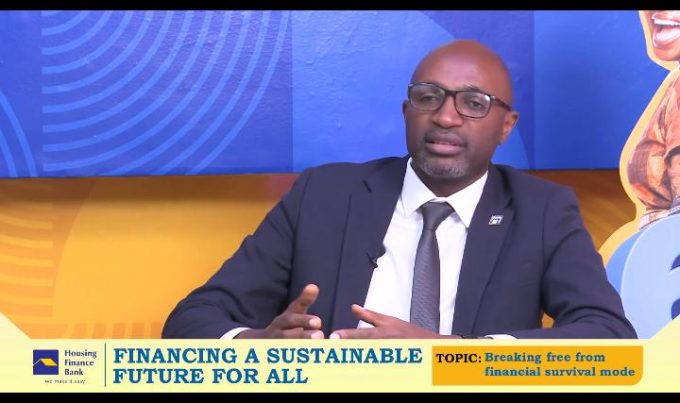
Breaking Free from Survival Mode: Lessons on Financial Discipline from Dickson Mushabe
At a recent Housing Finance Bank conversation under the theme “Financing a...
 Corporate editor2 Mins read

The Small Habit That Separates the Rich From the Broke
The Excitement of Deciding to Change Your Finances There is a story...
Corporate editor4 Mins read

You Built a Mansion but Traffic Raised Your Children
The Kampala commuter crisis lifestyle is quietly reshaping families, finances, marriages, and...
Editor Corporate News4 Mins read

When Money Is Plenty, Everything Makes Sense. Until It Doesn’t.
Jonan Kandwanaho, There’s a funny thing about money when it’s around. Suddenly,...
 Corporate News Editor4 Mins read