

Government Turns to New Taxes to Finance UGX84.2 Trillion Budget
 Editor Corporate NewsUpdated 2 months Ago2 Mins read219
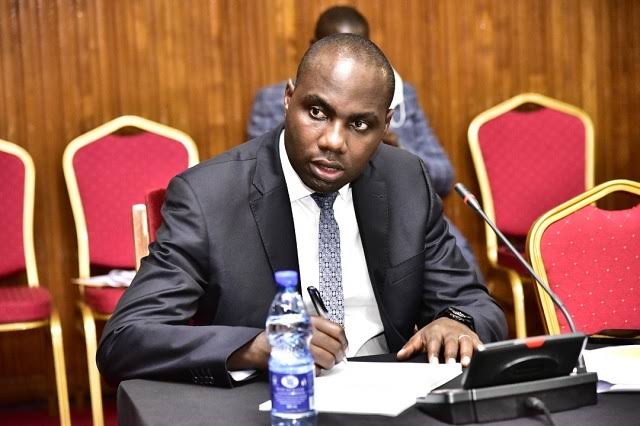
Uganda is planning to increase tax collections to finance its expanded UGX84.2 trillion budget for the 2026/27 financial year.
While presenting the proposals before Parliament of Uganda, Henry Musasizi said the Uganda Revenue Authority (URA) is expected to collect UGX44.5 trillion in tax revenue. This increase will help fund key government priorities.
Fuel Levy Proposal Raises Concerns
One of the most notable proposals is a UGX200 levy on every litre of petrol and diesel.
The government expects this measure to boost domestic revenue. However, it may also lead to higher fuel prices across the country.
Musasizi described the proposal as a modest increment. He added that detailed proposals will be submitted to Parliament’s Finance Committee for further review.
Budget Priorities and Key Investments
The new tax measures come as government ramps up spending in several priority areas. These include infrastructure, energy, rail transport, and security.
In addition, preparations for AFCON 2027 remain a major focus, as Uganda prepares to co-host the tournament.
Hamson Obua confirmed that the ruling NRM caucus has already backed the key spending priorities. Therefore, the budget direction has strong political support.
Salary Enhancements for Public Servants
A significant portion of the budget will go toward public sector salaries.
The government has allocated UGX2.5 trillion to gradually improve pay for primary school and arts teachers over the next four years.
According to Musasizi, the first phase is already underway. Government has set aside UGX550 billion, which represents 25 percent of the salary harmonisation plan.
Additionally, Chief Administrative Officers and selected security personnel will benefit from salary adjustments.
Changes to PAYE Tax
On worker taxation, the government will not increase PAYE rates. Instead, it plans to raise the tax-free income threshold from UGX235,000 to UGX335,000.
This change aims to ease the burden on low-income earners. As a result, workers earning below the new threshold will no longer pay PAYE.
However, the move is expected to reduce government revenue by about UGX96 billion.
Meanwhile, individuals earning above UGX10 million per month will continue to pay tax at the 40 percent rate.
Infrastructure Spending Remains Central
Beyond recurrent expenditure, the budget prioritises major infrastructure projects.
The government has allocated UGX1.38 trillion as counterpart funding for flagship developments. These include the Kampala–Jinja Expressway, the Standard Gauge Railway, and industrial parks.
In addition, UGX918 billion has been earmarked for road construction, maintenance, and rehabilitation nationwide.
Parliamentary Review Ahead
The proposals will now undergo detailed scrutiny in Parliament.
Lawmakers are expected to debate the impact of new taxes, especially the fuel levy, on businesses and household costs.
Ultimately, the outcome will shape how Uganda balances revenue generation with economic stability in the coming financial year.








NSSF Smartlife Flexi Brings Smart Savings to Makindye Retailers
NSSF partners with NBL & MTN MoMo Uganda at GRIT programme to...
 Corporate editor1 Mins read
Bank of Uganda Introduces Over-the-Counter Cash Withdrawal Limits Starting 2027
Bank of Uganda announces new over-the-counter cash withdrawal limits effective January 1,...
Corporate editor1 Mins read

Housing Finance Bank Shapes Dialogue on Urban Housing at Gulu Property Investment Conference
Housing Finance Bank is transforming urban housing finance in Uganda's secondary cities...
Corporate editor2 Mins read

2026 NSSF Suppliers Forum: Partnership & Innovation Drive Uganda’s Economic Transformation
The 2026 NSSF Suppliers Forum officially kicked off with a powerful message...
Corporate editor3 Mins read